What’s Stopping You?
less limit, more movement.
Peloton 2026
We’re Peloton.
We surveyed fitness enthusiasts across the nation and discovered one thing: people want to work out, but something is standing in their way.
We know what you want. But what’s stopping you?
Creative Brief
Who is the target audience?
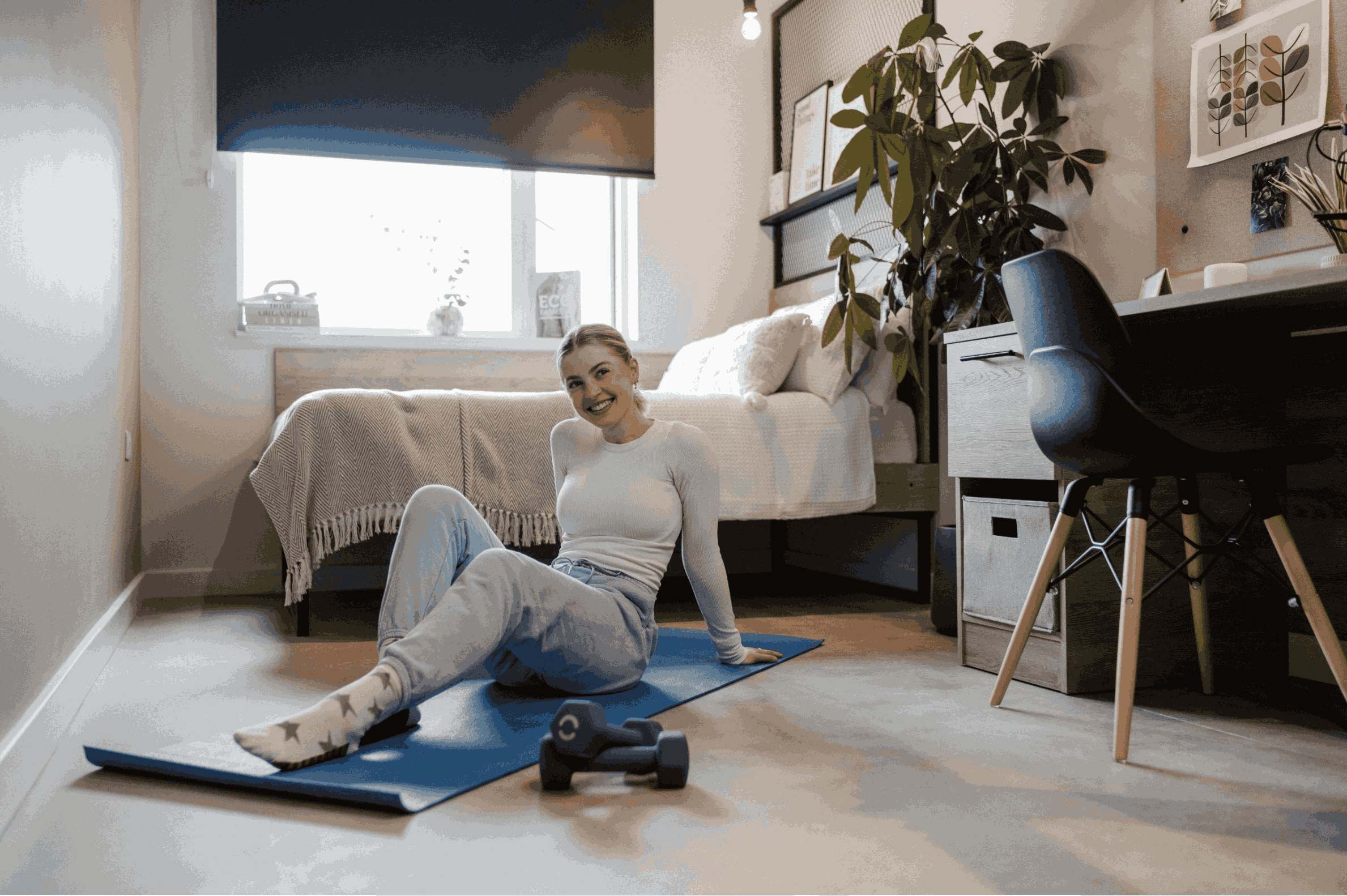
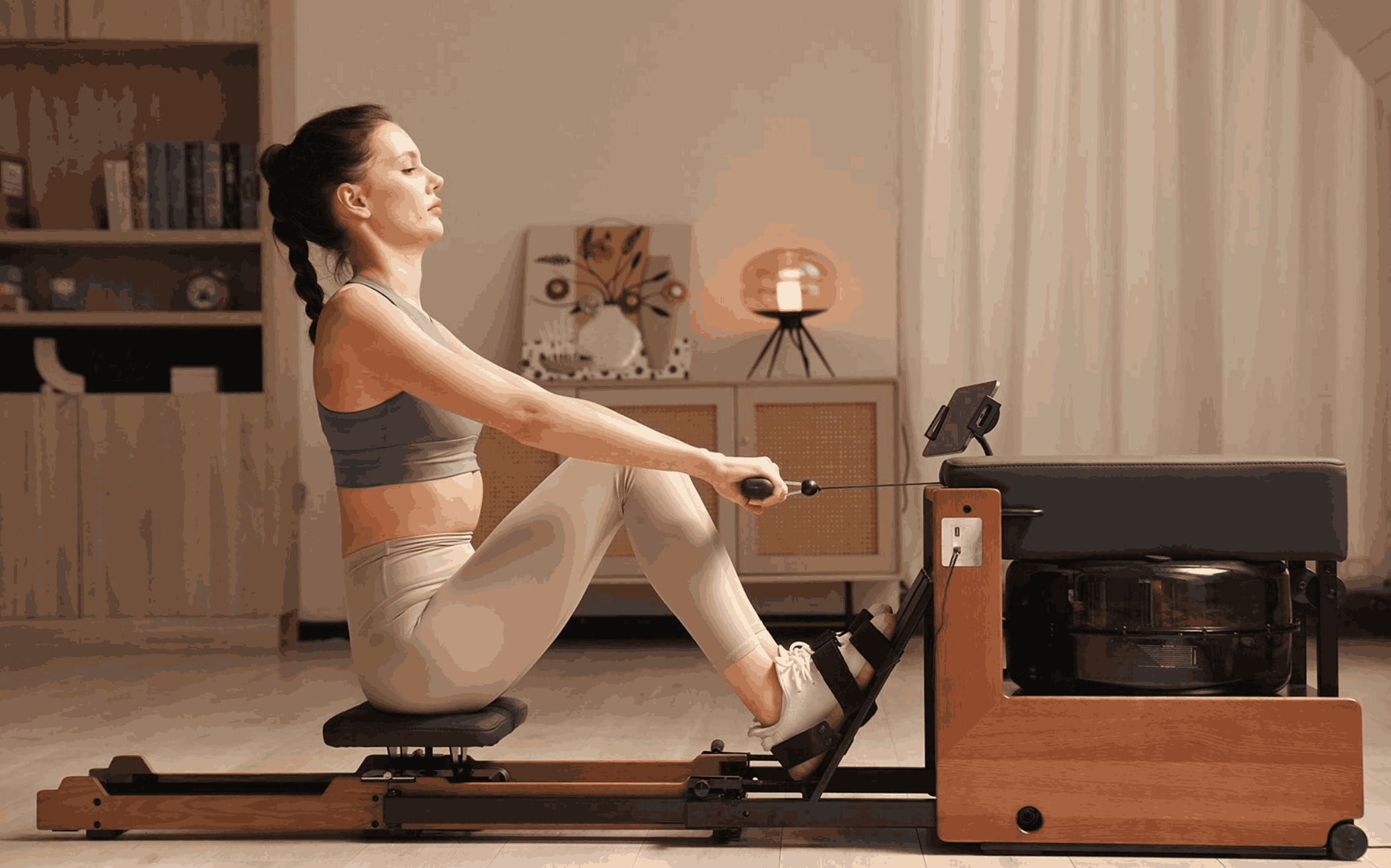
This campaign targets Gen Z and young millennial college students and recent graduates living in dorm rooms or small apartments. They want to exercise regularly, but limited space and tight budgets can make home fitness equipment feel out of reach. The Small Shell, Peloton’s compact, budget-friendly rowing machine, gives this campaign a specific audience and purpose: showing young adults how connected fitness could fit into their living spaces and everyday routines.
Where will this ad appear?
The campaign will appear on YouTube in-stream ads and Spotify audio ads to reach fitness-interested audiences. OOH advertisements will be placed near college dormitories and public gyms, where the messages can connect with consumers’ everyday experiences.
What is the goal?
The campaign aims to build awareness of The Small Shell ahead of its Jan. 1 launch and encourage students and recent graduates to consider it for their homes. Timed to New Year’s resolutions, the campaign connects the motivation to start exercising with practical concerns about space and cost, giving audiences a reason to learn more about the product.
What is the current perception of the brand vs the desired perception of this ad?
Currently, Peloton is often perceived as a premium fitness brand with expensive equipment. The desired perception is a more approachable, convenient, and practical fitness brand that understands consumers’ different needs and lifestyles.
Why do we need this ad?
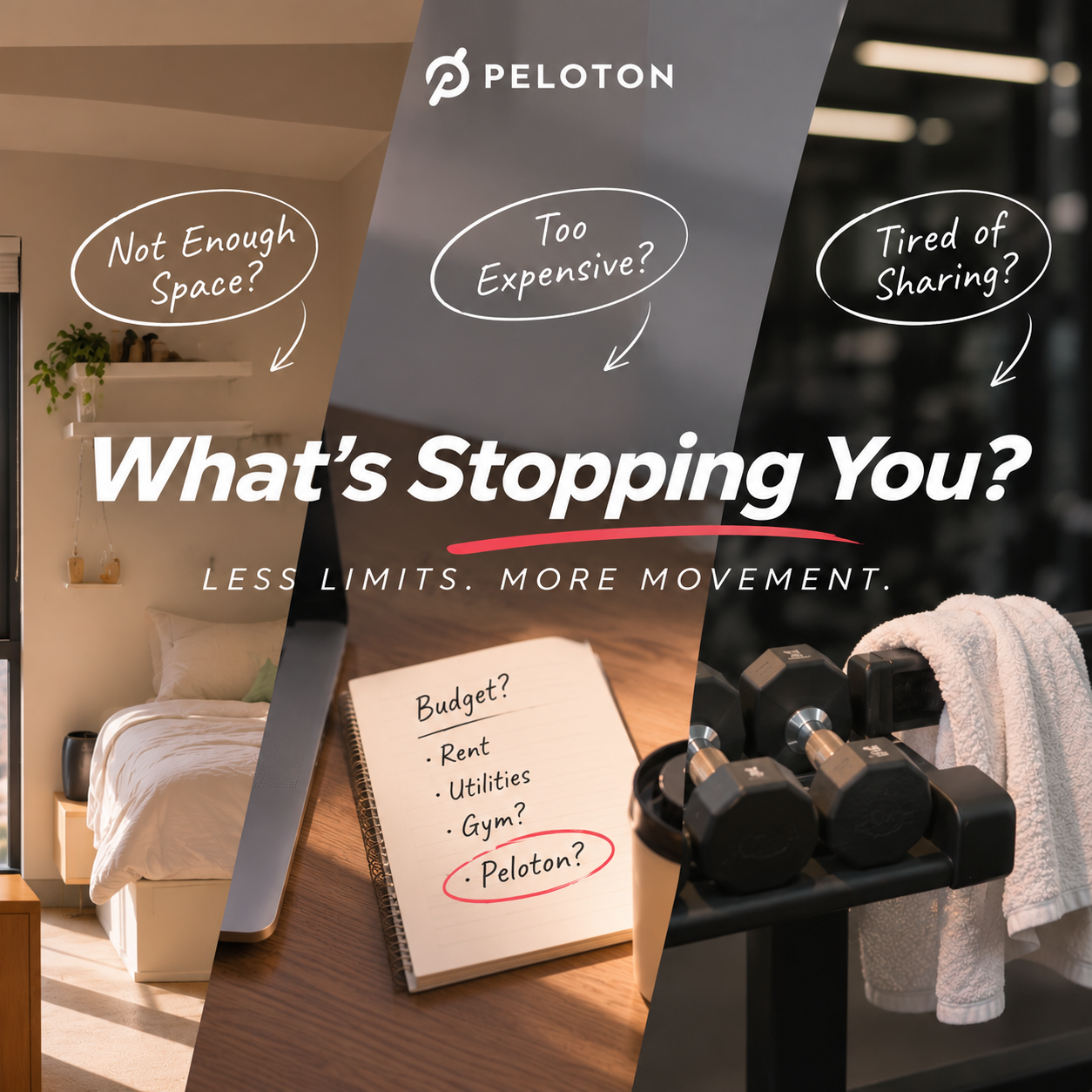
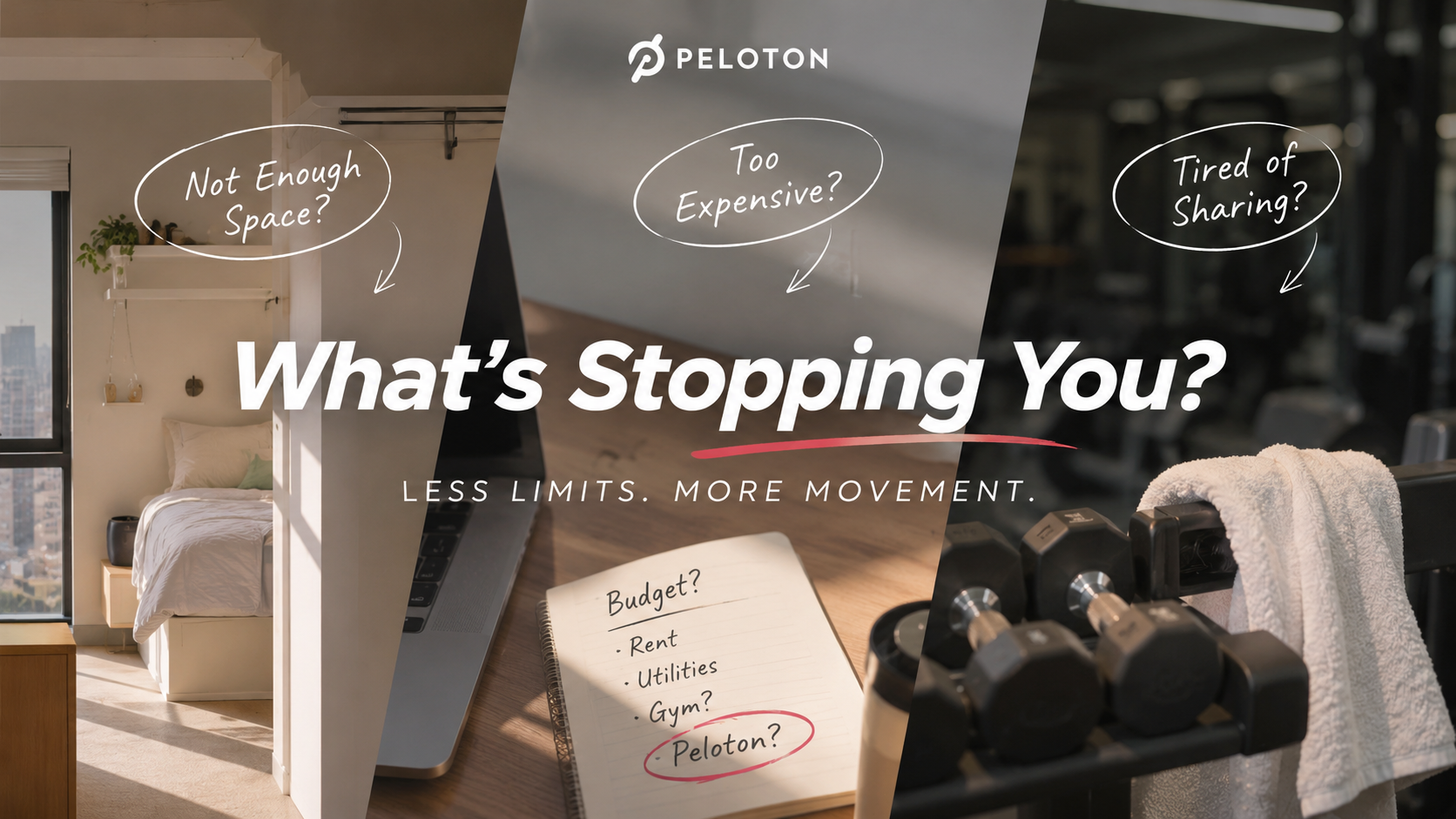
Many people want to exercise regularly but face barriers such as limited space, financial concerns, or discomfort with shared gym equipment. Instead of focusing only on product features, this campaign uses three relatable scenarios to visualize these frustrations and connect them with Peloton’s value.
By showing that Peloton understands everyday fitness challenges, the campaign aims to build stronger emotional connections and motivate consumers to reconsider the brand.
Explore The Plot
Video ads



Digital Advertising
YouTube in-stream ads and Spotify audio ads, reaching students and young professionals who already engage with fitness content.
By connecting with audiences during their everyday digital routines, we can introduce a more accessible way to bring connected fitness home.
OOH & Print Advertising
We’ll bring “What’s Stopping You?” to bus shelters near USC and UCLA student housing, as well as outdoor advertising spaces near public gyms in Los Angeles.
These locations allow us to reach people who experience the very barriers The Small Shell is designed to address. We’ll also place a full-page ad in Daily Trojan magazine to connect with our target audiences.
Strategy Notes
The headline “What’s Stopping You?” is designed to speak directly to consumers who want to exercise but face everyday obstacles. Rather than immediately promoting product features, the question encourages audiences to reflect on their own fitness frustrations.
The word “stopping” creates a connection between the desire to work out and the barriers that prevent people from taking action. It also allows the campaign to introduce three different scenarios: limited living space, budget concerns, and discomfort with shared gym equipment.
The supporting line, “Less Limits. More Movement,” shifts the message from frustration to possibility, positioning Peloton as a potential solution.
Placing these advertisements near student housing and public gyms allows the message to reach consumers in contexts where these concerns may be especially relevant. The campaign aims to build awareness, create emotional relevance, and encourage audiences to explore the new product.